Why gas interlocking exists
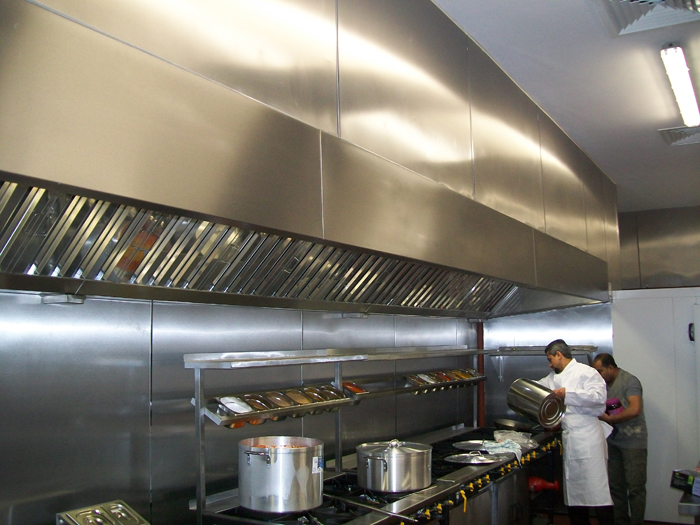
Commercial kitchens combine two things that don't mix well without careful engineering: open gas flames and extraction systems that must keep working for the flame to burn safely. If a kitchen extraction canopy fails or is switched off while gas appliances are still alight, the gases produced by combustion have nowhere safe to go — and that's exactly the scenario BS6173 gas interlocking is designed to prevent.
All new commercial kitchen gas installations, and many existing ones being modified or extended, must have a gas interlock system fitted to comply with BS6173.
How a gas interlock actually works
A gas interlock uses an air pressure sensor or current monitoring device to detect when the extraction canopy is running and moving sufficient air. Only when those conditions are met is a normally-closed gas solenoid valve on the incoming gas supply allowed to open.
- While airflow continues to meet the required level, gas equipment can be used as normal.
- If airflow drops below the required level, or the ventilation system is switched off, the gas solenoid valve closes automatically — cutting the gas supply.
- The system resets once extraction is restored and verified.
The interlock prevents gas being turned on until the ventilation system is fully operational — it's a fail-safe, not an inconvenience.
Who can install one
Because this sits at the intersection of gas safety and ventilation engineering, installation should only be carried out by a commercially registered Gas Safe Register (formerly Corgi) engineer, with all gas components and catering equipment approved as part of the same sign-off.
What Cool Stream Ventilation provides
We supply and install commercial gas kitchen systems that fully comply with BS6173 as standard on every kitchen ventilation project — not as an optional extra. Our engineers test the interlock as part of commissioning, so you have a system that's compliant from day one, not just on paper.