
The problem with simply opening a window
Opening a window does provide ventilation — but it wastes energy. In winter, a building's heat and humidity escapes; in summer, cooled air conditioned air is replaced with warm air from outside. Either way, your HVAC system ends up working overtime to compensate, and your energy bill reflects it.
What heat recovery actually does
Heat recovery ventilation captures energy from the air being extracted from a building and transfers it to the incoming fresh air stream, rather than letting it escape. Properly specified, a heat recovery system can recover up to approximately 50% of the energy from the extract airstream of a ventilation system.
The most common method: plate heat exchangers
The plate heat exchanger is the most widely used heat recovery technology for ventilation systems. Energy is transferred from one air stream to another with no cross-contamination between the two — extract air and fresh air never physically mix, only the heat passes across the plates.
Where the input and extract systems are located remotely from each other — for example, on opposite sides of a large building — a run-around coil system can be used instead, overcoming the practical difficulty of routing both air streams to a single exchanger.
Why it matters more than ever
As environmental issues become increasingly influential in the design of mechanical ventilation systems, including a heat recovery facility can contribute to considerable energy savings and a genuine reduction in related carbon emissions — not just a lower bill, but a smaller footprint.
Pairing heat recovery with efficient air conditioning
Heat recovery ventilation works well alongside inverter-driven air conditioning using R410A refrigerant, which matches compressor speed to actual heating or cooling load — on its own capable of up to 30% reduction in energy consumption. Combined, the two approaches can make a measurable difference to a building's running costs.
Buildings that benefit
Heat recovery pays back best where fresh air is needed for long hours, and where there is a meaningful temperature difference between inside and outside air: offices, restaurants' dining areas, retail units, schools and care settings. Where ventilation runs only occasionally, the saving is small.
What to check before specifying it
- How many hours a day will it run, and at what airflow?
- Where can the unit and ducts physically go?
- How will the heat exchanger be accessed for cleaning and filter changes?
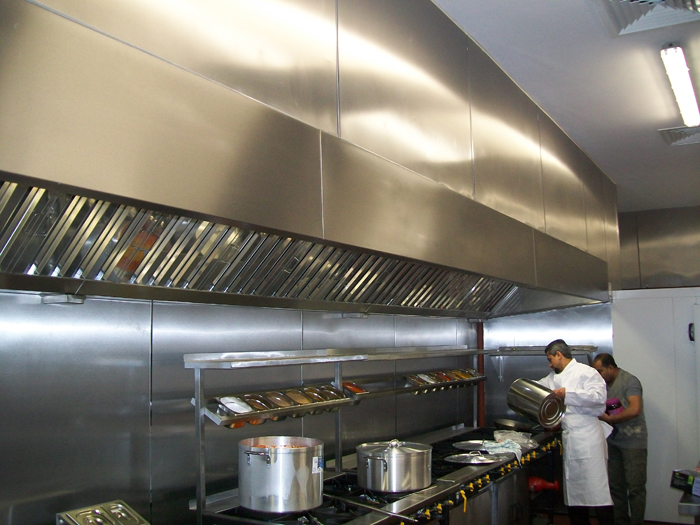
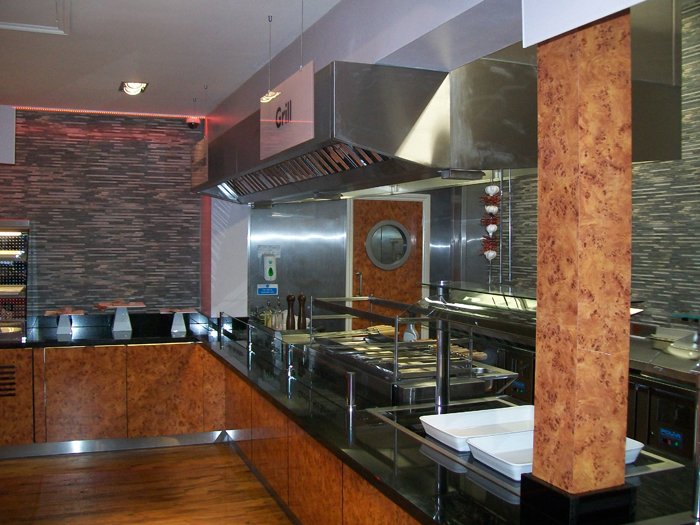
- Is the airstream suitable? Grease-laden kitchen extract needs separate treatment, so heat recovery is not generally applied to it directly. See kitchen extraction.
- How is the system controlled, and does it avoid running at full speed when the building is empty?
Our commercial ventilation page explains how we design supply and extract with heat recovery, and our environment page covers our approach to efficiency.
How much can you save?
A system can recover up to approximately 50% of the energy from the extract airstream. The saving to your bills depends on hours, climate, fan power and controls, so we don't promise a fixed percentage; we look at your building. See also VRF or split air conditioning.
Heat recovery in different building types
In an office, heat recovery pairs naturally with air conditioning, pre-cooling the fresh air in summer and pre-heating it in winter. In a restaurant dining room it reduces the load of constantly bringing in fresh air for diners. In a shop with frequent door openings, balanced ventilation helps keep the internal environment stable. The common thread is long operating hours and a steady need for fresh air. Ask us to assess your building under our ventilation service.
Controls make the difference
Heat recovery only saves energy if the fans are not running harder than they need to. Timers, occupancy or CO2 sensing and variable speed fans stop the system moving more air than the building needs, and bypass modes allow free cooling when outside air is already at the right temperature. Ask any supplier how the controls work, not only what the heat exchanger can do.
Frequently asked questions
How does heat recovery ventilation work?
It transfers heat from outgoing stale air to incoming fresh air through a heat exchanger, without the two streams mixing.
How much energy can heat recovery recover?
Up to approximately 50% of the energy from the extract airstream.
Can heat recovery be used on kitchen extract?
Grease-laden kitchen extract needs separate treatment, so it is not usually applied directly. Ask us about your building.
Does heat recovery need maintenance?
Yes. Filters and the heat exchanger need regular inspection and cleaning.