
Supplier, contractor or installer: what's the difference?
People search for a "ventilation supplier" when they may need one of three things: someone to sell equipment (fans, canopies, filters), someone to design and install a complete system, or someone to maintain what they already have. Many companies do more than one. Before comparing quotes, be clear which you need, because a quote for parts and a quote for a commissioned system are not comparable.
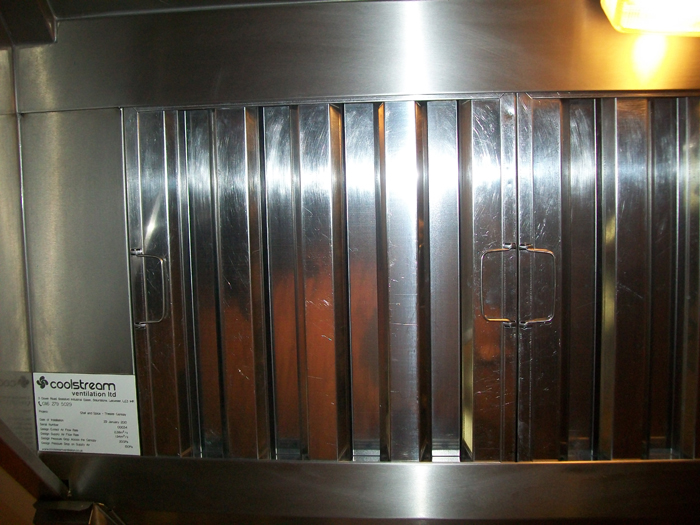
Cool Stream designs, manufactures, installs, commissions and maintains commercial kitchen extraction, ventilation and air conditioning, and can also supply canopies and baffle filters on their own.
Ten questions to ask any ventilation supplier
- Will you survey the premises before quoting?
- Who designs the airflow, and from what information?
- Which standards do you build and install to?
- Is make-up air included?
- Who carries out gas and refrigerant work, and what qualifications do they hold?
- Do you manufacture the key components, or buy them in?
- What testing and commissioning is included, and what records do I receive?
- How do you handle planning, Environmental Health and landlord requirements?
- What happens after hand-over if something fails?
- Can you show similar completed projects?
What good looks like for kitchen extraction
For kitchens, the benchmark is HSE's guidance CAIS10. It says advisors, suppliers and installers should be competent and have knowledge of industry practice and relevant health and safety guidance and legislation, that gas-fired appliances should be installed by a Gas Safe engineer, and that records of design criteria, commissioning performance and maintenance should be kept. A supplier who cannot talk about those things comfortably is a risk. See kitchen extraction regulations.
What good looks like for air conditioning and ventilation
For air conditioning and ventilation, ask about the design basis (cooling load, fresh-air rates), the controls, the refrigerant and how F-gas leak checks will be managed, and how installation will be tested to BS EN 378. Ask who will maintain the plant afterwards. See commercial ventilation and air conditioning.
Red flags
- A fixed price over the phone with no survey.
- No mention of make-up air, a gas interlock or access doors.
- Vague answers about standards (DW/172, BS 6173).
- No written scope, so you cannot tell what is excluded.
- Pressure to decide quickly.
- Nobody to call after installation.
A simple scoring sheet
Score each supplier from 1 to 5 on: survey before quote, written scope, named standards, qualified gas and refrigerant engineers, commissioning and records, planning and Environmental Health support, after-sales response and relevant examples. Add the price last. A supplier who scores well on the first eight and is a little more expensive is usually better value than a cheap quote that leaves items out. Ask each supplier to put the answers in writing, so you can compare them properly.
Compare like for like
Make a table of what each quote includes: design, canopy, filters, ductwork and access doors, fan, make-up air, interlock, odour control, installation, commissioning and records, and any maintenance. Differences in price usually trace to differences in scope. Read our cost drivers guide for more, and ask us for a survey.
Frequently asked questions
What is the difference between a ventilation supplier and an installer?
A supplier sells equipment; an installer designs, fits and commissions a system. Some businesses do both. Check which you are being quoted for.
Should I choose the cheapest quote?
Not without comparing scope. The cheapest quote often leaves out make-up air, commissioning or records.
What accreditations should I look for?
Relevant qualifications for the work: Gas Safe registration for gas work, and certification for refrigerant handling for air conditioning. Ask to see them.
Do you survey before quoting?
Yes. We survey the premises and provide scheme drawings and a quotation.
Do you work across the UK?
Yes. Call or WhatsApp 07759 696007 with your location.