1. Visible grease build-up on filters or ductwork
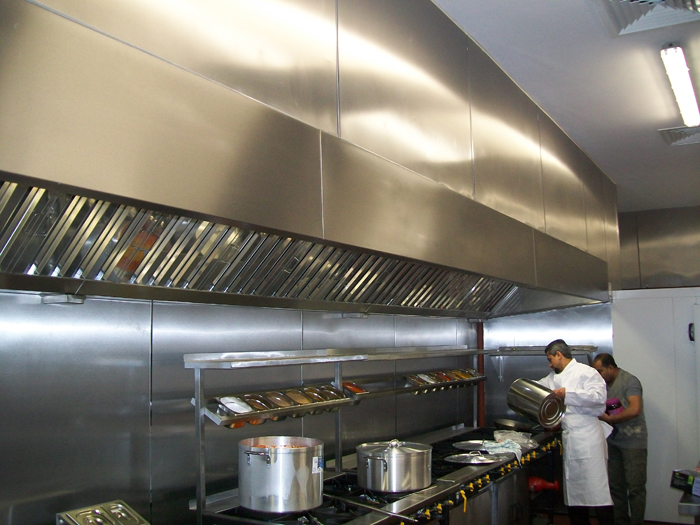
A small amount of grease on baffle filters is normal — that's their job. But if grease is visibly pooling, dripping, or building up on surfaces beyond the filter housing, your extraction isn't capturing everything it should, and the fire risk starts to climb.
2. Persistent cooking smells beyond the kitchen
If odours are drifting into dining areas, neighbouring units, or the street outside, your filtration and extraction rate may no longer be matched to your cooking load — particularly relevant for restaurants sharing premises with other businesses or residential neighbours.
3. Unusually loud or vibrating fans
Extraction fans should run consistently. A sudden increase in noise, rattling, or vibration transmitted through ductwork or the canopy itself often points to worn bearings, an unbalanced fan, or ductwork that's come loose — all worth investigating before they fail completely, usually at the worst possible time.
4. A hot, stuffy kitchen despite the extraction running
If staff are still working in oppressive heat with the extraction system switched on, the make-up air balance may be wrong. Every extract system needs to be balanced by an input or make-up air system — without it, the extraction fights against negative pressure and struggles to actually clear the air.
5. It's been longer than 12 months since your last inspection
Regulations and insurance requirements aside, an annual inspection of your extraction canopy, ductwork and gas interlock system catches small issues — a worn seal, a failing sensor, a partially blocked filter — before they become an expensive breakdown or, worse, a compliance failure during an Environmental Health inspection.
What to do next
If any of the above sounds familiar, it's worth booking a proper inspection rather than waiting for a visible failure. Cool Stream Ventilation's service and maintenance programmes are tailored to your equipment, environment and budget — covering everything from filter replacement to full system overhauls.
Act in this order
- Safety first. If you smell burning, see smoke in the duct or grease dripping, or the gas interlock has tripped, stop cooking and call a competent engineer. Never bypass the interlock.
- Check the basics. Are filters clean and fitted? Is the fan running, and at normal speed? Is the make-up air supply working?
- Look for the pattern. Does it happen at peak times only, or all the time? Since when? After any change of appliances or menu?
- Call for a survey. Measure the airflow and inspect the system.
HSE guidance (CAIS10) notes that systems should be easy to clean, avoiding build-up of fat residues and blocked air inlets that cause loss of efficiency and increased fire risk, and be maintained in efficient working order.
Related reading
See commercial kitchen extract cleaning and TR/19, make-up air in commercial kitchens and our planned maintenance service.
How often should you have the system looked at?
An annual inspection is a sensible minimum. Heavily used kitchens benefit from more frequent filter cleaning and a scheduled ductwork clean agreed against TR/19. Between inspections, make it someone's job to check filters, listen to the fan, look for grease and test the gas interlock. Record what you find: HSE advises keeping records of maintenance requirements, tests and inspections, and a log makes it easy to see when a problem started.
When a sign is really a design problem
Sometimes the same warning sign keeps returning because the system was never right for the kitchen: a canopy that is too small for a new grill, a fan too small for a longer duct, or no make-up air at all. If cleaning and servicing do not fix it, ask for a survey. We measure the airflow, inspect the canopy, duct and fan and recommend the most cost-effective fix. See our kitchen extraction systems and make-up air systems.
Frequently asked questions
How often should a kitchen extraction system be inspected?
Annual inspection is common practice, with filters cleaned much more often according to how heavily you cook.
What causes a smoky canopy?
Common causes are low airflow, blocked filters, an undersized canopy or no make-up air.
Is a noisy extract fan a problem?
A sudden increase in noise or vibration often points to worn bearings, an unbalanced fan or loose ductwork and is worth investigating.
Who can inspect my extraction system?
A competent ventilation engineer. We survey and advise across the UK.