
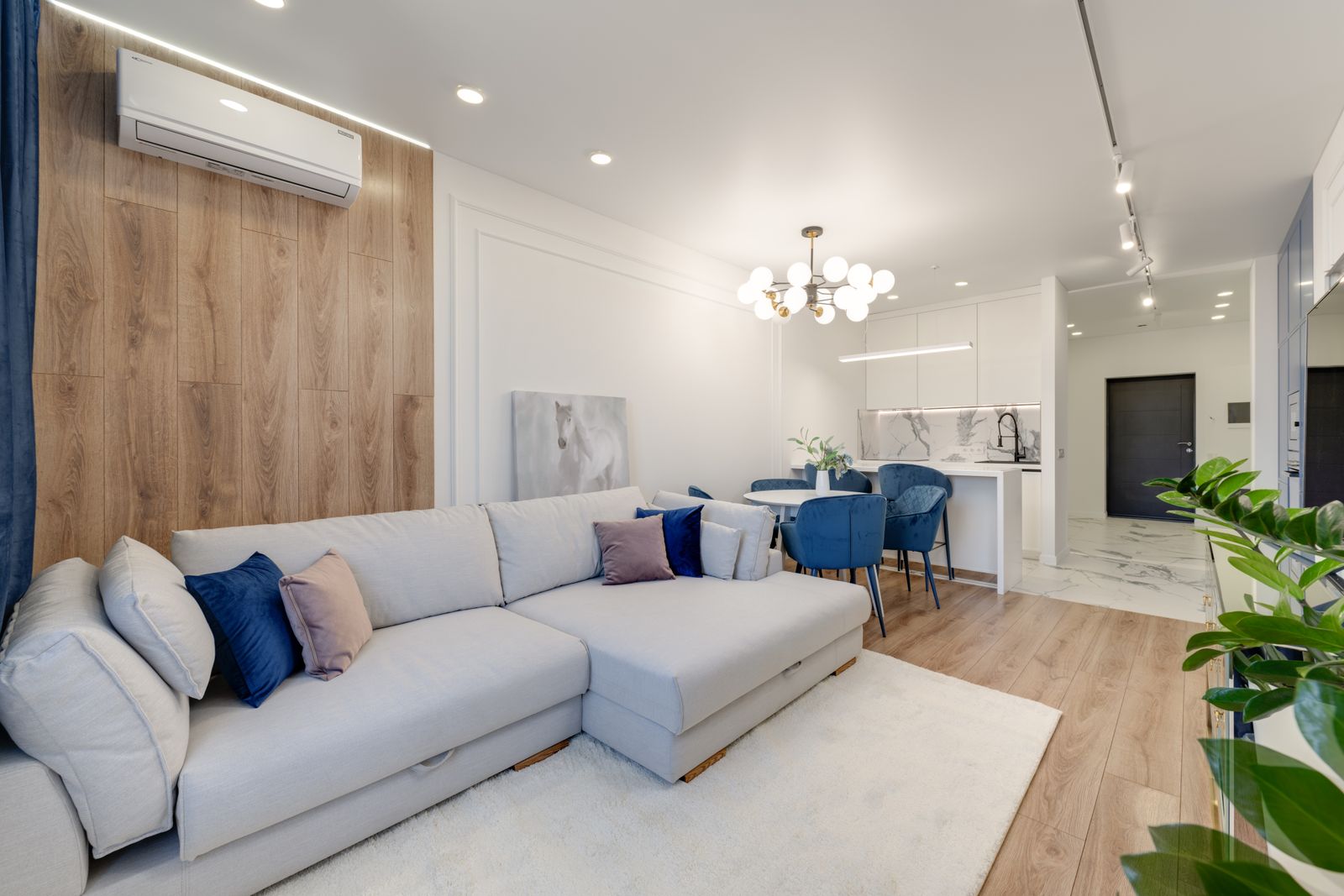
Why there is no standard price
Two buildings of the same floor area can need very different systems. A shop with big south-facing windows and a till area has a different cooling load from an interior office. Cost follows the design, so we survey and calculate rather than quote from floor area alone.
The main cost drivers
| Driver | Why it matters |
|---|---|
| System type | Single split, multi-split, VRV/VRF, ducted or central plant differ in equipment and installation |
| Cooling and heating capacity | Set by the heat load of the space |
| Number of zones and indoor units | More zones mean more units, pipework and controls |
| Pipework and ductwork | Longer, more complex routes cost more |
| Electrical supply | Upgrades may be needed |
| Access and working hours | Out-of-hours work, lifting and scaffolding add cost |
| Controls | Zoning, scheduling and building management |
| Ventilation | Fresh air is a separate system that must be designed in |
| Commissioning and records | Testing to BS EN 378 and handover |
Running costs matter too
An inverter system matches compressor speed to the load; up to a 30% reduction in energy consumption can be achieved. Good controls, correct zoning and regular maintenance keep running costs down. Capital cost alone is a poor guide.
Refrigerant and compliance
Systems contain refrigerant, so leak-check intervals under GOV.UK F-gas rules depend on the charge. Systems using R22 cannot be topped up, which often makes replacement the sensible route. See F-Gas rules.
How to compare quotes
- Check each quote covers design, equipment, installation, commissioning and records.
- Compare the system type and capacity, not just the price.
- Check what is excluded: electrical work, builders' work, ventilation, making good.
- Ask who maintains the system and how.
What to have ready for a survey
Floor plans or sketches, the use of each room, occupancy and equipment, any existing air conditioning details, access arrangements and working hours, electrical supply information and your priorities (budget, noise, appearance, running cost). With these we can recommend a system, explain the trade-offs and give a written quotation that is easy to compare.
Running costs and payback
When comparing options, look beyond the installed price. Energy use, maintenance and expected life all affect the cost over time. A system that costs more to install but uses less energy and fails less often can be cheaper overall. Ask for the expected running characteristics as well as the quotation.
Next step
Tell us about your building and we will survey, recommend a system and quote. See commercial air conditioning and restaurant air conditioning.
Sources and further reading
Independent references we used, so you can check the rules yourself:
- GOV.UK: Checking F-gas equipment for leaks
- GOV.UK: Building Regulations Approved Documents
- CIBSE (Chartered Institution of Building Services Engineers)
Frequently asked questions
Why won't you give a price over the phone?
Because capacity and layout vary widely. A survey avoids misleading numbers.
Does air conditioning installation include ventilation?
Not unless specified. Fresh air is usually a separate system designed alongside.
Can installation work around opening hours?
Usually yes; we plan to minimise disruption.
Do you offer maintenance after installation?
Yes. We maintain every type of air conditioning system.

