What makes Indian kitchens demanding
Indian restaurant kitchens commonly combine several heavy cooking methods at once: high-heat frying and sauteing, large pots, griddles and, in many kitchens, a tandoor oven. That puts a high, continuous load on the extraction, produces grease-laden air and, with spices, distinctive cooking smells. The design has to be based on your actual equipment and menu, not a generic restaurant.
Canopy design
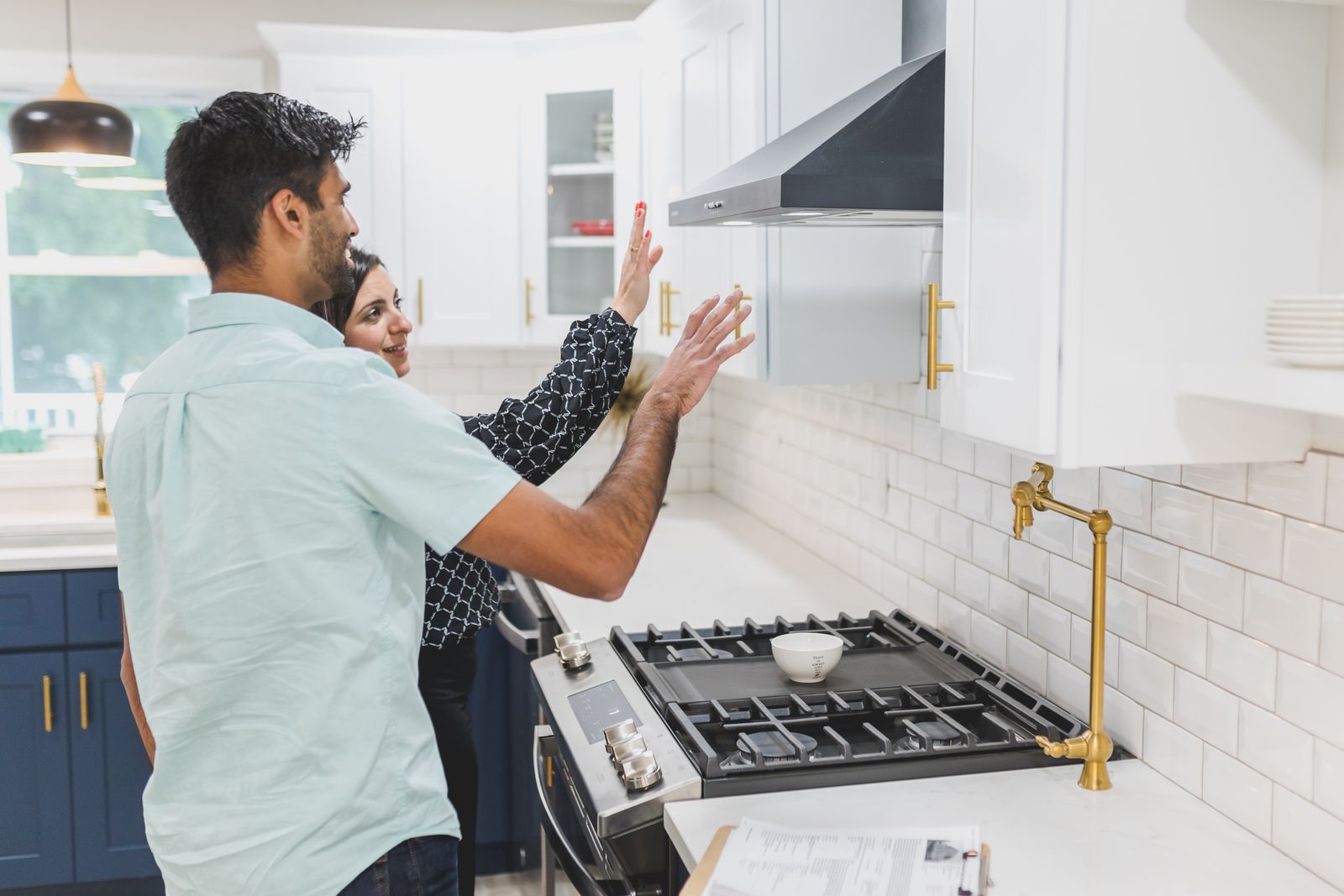
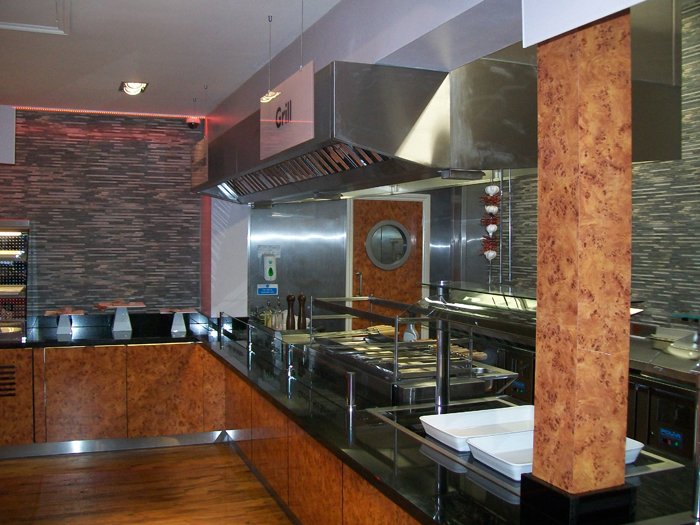
HSE guidance in CAIS10 says there should be a canopy hood for every appliance or source of fumes and heat, close to the source, with enough extraction to minimise spillage. Wall-mounted canopies suit most lines; island canopies suit open, central cooking. Our canopies are made from 304 stainless steel, 20 gauge, braced and welded, in standard or bespoke sizes. See extraction canopies and wall-mounted versus island canopies.
Tandoor ovens and solid fuel
Tandoors may burn charcoal or gas, depending on the oven. HSE notes that charcoal ovens cannot be switched off, so ventilation must continue when the oven is covered and cooling down overnight to prevent carbon monoxide building up. Confirm the manufacturer's installation requirements early, because the tandoor's flue and the kitchen extraction must be designed to work together. Read our guide to charcoal grills, pizza ovens and solid-fuel cooking.
Make-up air and gas safety
Heavy extraction needs plenty of replacement air, and gas appliances need enough air for complete combustion. Poor make-up air is a common cause of smoky canopies and tripping interlocks. See make-up air systems and gas interlock systems.
Odour, discharge and neighbours
Spice-laden air carries. Planning authorities often look for effective grease capture, filtration where needed and a high-level discharge so smells disperse above neighbouring windows. See kitchen odour control and our planning guide.
Questions to settle before you order
Which appliances will sit under each canopy, and what fuel do they use? Is a tandoor oven being installed, and what are the manufacturer's flue and ventilation requirements? Where can the duct rise and discharge? What does the council require for odour? How often will the filters and ducts be cleaned? Settling these before the canopy is fabricated avoids the most expensive changes, because the canopy, duct and fan sizes all follow from the answers.
Cleaning
Heavy frying and spice cooking mean grease builds up quickly, so clean baffle filters regularly and arrange specialist ductwork cleaning on a schedule; see extract cleaning and TR/19. We design ductwork with access doors so cleaning is possible.
Sources and further reading
Independent references we used, so you can check the rules yourself:
- HSE: Ventilation in catering kitchens (Catering Information Sheet 10)
- HSE: Gas safety in catering and hospitality (CAIS23)
- Planning Portal
Frequently asked questions
Do tandoor ovens need their own extraction?
Often the oven has its own flue, and the kitchen needs separate extraction designed to work with it. Follow the oven manufacturer's requirements and involve the designer early.
Can you design canopies for any cuisine?
Yes. We design from the equipment and menu, whatever the cuisine.
How do we keep spice smells from neighbours?
Capture at source, filter where required and discharge at a suitable high level. A survey will recommend what your site needs.
Do you supply bespoke canopies for restaurants?
Yes. We fabricate bespoke stainless steel canopies at our own works and supply them UK-wide.