Industrial ventilation is not one thing
Industrial ventilation covers several different jobs: providing fresh air for people, removing heat and humidity, diluting or removing contaminants and keeping equipment cool. The design depends on whether the building is a manufacturing hall, a warehouse, a plant room or a mix.
General ventilation
General (dilution) ventilation supplies fresh air and extracts stale air across the space using roof or wall fans, ducted supply and extract systems or air handling units. Employers must provide effective and suitable ventilation in every enclosed workplace under the Workplace (Health, Safety and Welfare) Regulations 1992. For people, this is the baseline.
Heat and cooling
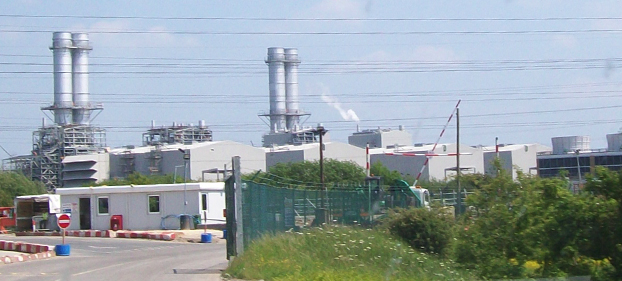
Machinery, processes and sunlight load buildings with heat. Options range from increased ventilation to air conditioning for control rooms, offices, electrical rooms and plant. Our industrial work includes 20 air conditioning systems across the water treatment, electrical and chemical dosing buildings at Staythorpe Power Station; see the case study.
Local exhaust ventilation and hazardous processes
Where a process releases dust, fume or vapour that could harm health, HSE expects the hazard to be controlled at source, usually with local exhaust ventilation (LEV) designed, installed and tested for that process and managed under COSHH. That is specialist work. If your process is of this kind, tell us what it involves and we will tell you honestly whether it is within our scope.
Warehouses
Large warehouses face heat build-up under the roof, poor air movement, condensation and, with vehicles, fume build-up. Solutions can include roof ventilation, air movement and zoned heating or cooling for offices, picking areas or cold stores. A survey identifies the real problem first.
Questions to ask before commissioning a design
What heat load and contaminants does the process produce? Which areas are occupied, and for how long? Are there hazardous substances that need local exhaust ventilation designed and tested for them? What must stay running during maintenance? Where can plant and ductwork go without disturbing production? Settling these before design saves expensive changes later, and tells us whether the work is within our scope.
Energy and controls
Large buildings can waste a lot of energy on ventilation that runs flat out regardless of need. Variable-speed fans, zoning and sensors help, and heat recovery may suit conditioned areas such as offices.
Maintenance
Industrial plant runs long hours in tough conditions, so planned maintenance matters: filters, belts, bearings, coils and controls need regular attention. See maintenance and servicing and the industrial sector page.
Sources and further reading
Independent references we used, so you can check the rules yourself:
- HSE: Ventilation in the workplace
- HSE: Local exhaust ventilation (LEV)
- HSE: COSHH (control of substances hazardous to health)
- legislation.gov.uk: Workplace (Health, Safety and Welfare) Regulations 1992
Frequently asked questions
Do factories need air conditioning?
Not always. Many use ventilation for the production area and air conditioning for offices, control and electrical rooms. It depends on heat load and the process.
What is LEV?
Local exhaust ventilation captures contaminants at their source. It is specialist work that must be designed and tested for the process.
Can you ventilate a warehouse?
We design and install ventilation and air conditioning for industrial and commercial buildings; tell us the problem and we will survey.
Do you work for industrial clients across the UK?
Yes, including major energy infrastructure.