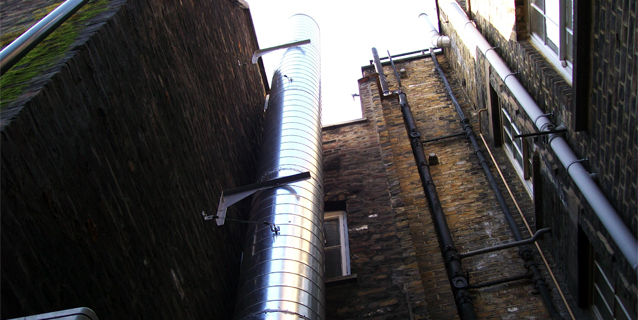

Where the noise comes from
Kitchen extraction noise has four main sources: the fan itself, air rushing through ducts and grilles, vibration carried through the structure and the discharge outlet. Identify which one is the problem before choosing a fix.
Choose and size the fan correctly
A fan that is too small for the system runs hard and noisily; one that is far too large can be noisy at the speed needed. HSE says kitchen ventilation should be quiet and vibration free (CAIS10). See commercial extract fans explained.
Attenuators and duct design
Attenuators (silencers) in the duct reduce the noise travelling to the discharge and the kitchen. Lower duct velocities, smooth bends and generous duct sizes also reduce air noise. These are best built in at design stage; see kitchen extract ductwork.
Vibration isolation
Fan vibration can travel through the structure into the building. Anti-vibration mounts, flexible connections and proper support reduce it. Check fixings regularly.
Speed control and positioning
Speed controllers let the fan run slower when cooking is light. Locating fans and discharge points away from neighbouring windows, bedrooms and outdoor seating reduces complaints. Planning conditions may set noise limits.
Noise and the law
Excessive noise from commercial premises can lead to neighbour complaints and, in serious cases, statutory nuisance action under the Environmental Protection Act 1990. Councils may also set noise limits through planning conditions; see planning permission for kitchen extraction.
A simple noise-reduction plan
- Identify the source: fan, duct, vibration or discharge.
- Check the basics: bearings, belts, balance and fixings.
- Confirm the fan is right for the duty and running at a sensible speed.
- Add attenuators or lagging where noise travels along the duct.
- Isolate the fan and ductwork from the structure.
- Review the position of the fan and discharge relative to neighbours.
Start with the cheap checks; they solve many complaints before any new equipment is needed.
Typical results to expect
Simple fixes such as replacing worn bearings, rebalancing an impeller or tightening fixings often make a clear difference. Larger improvements, such as attenuators or relocating a fan, need design and approval, so ask for a survey that measures the problem before recommending a solution.
When noise is a symptom
A sudden increase in noise, rattling or vibration usually means worn bearings, a loose or unbalanced impeller, a slipping belt or loose ductwork. Act promptly; see signs your extraction needs attention and our maintenance service.
Sources and further reading
Independent references we used, so you can check the rules yourself:
- HSE: Ventilation in catering kitchens (Catering Information Sheet 10)
- legislation.gov.uk: Environmental Protection Act 1990 (statutory nuisance)
- HSE: Noise at work
Frequently asked questions
Can an existing noisy system be quietened?
Often yes, with attenuators, vibration isolation, speed control, new fixings or a better-suited fan. A survey will identify the cause.
Do planning conditions limit extraction noise?
They can. Councils sometimes set noise limits for fans and plant.
Is a noisy fan dangerous?
It may point to a failing bearing or imbalance, which can lead to breakdown. Have it checked.
Can you design for low noise?
Yes. We design fans, attenuation and routes with noise limits in mind.